> For the complete documentation index, see [llms.txt](https://docs.ticket-log.com/llms.txt). Markdown versions of documentation pages are available by appending `.md` to page URLs; this page is available as [Markdown](https://docs.ticket-log.com/release-notes/2024.06.10-multi-forms.md).
# 2024.06.10: Multi-forms
Today we have a major release for an exciting new feature: **Multi-forms**!
{% hint style="info" %}
For the latest information on multi-forms, refer to [Forms & fields](/documentation/administrators-guide/forms-and-fields.md).
{% endhint %}
With multi-forms, you can prompt users to choose from multiple submission forms for new tickets, with each form having different custom fields and Azure DevOps configuration.
Also in this release, some configuration settings have moved from General and Azure DevOps pages to the new Form & Fields page.
## Changes to existing settings
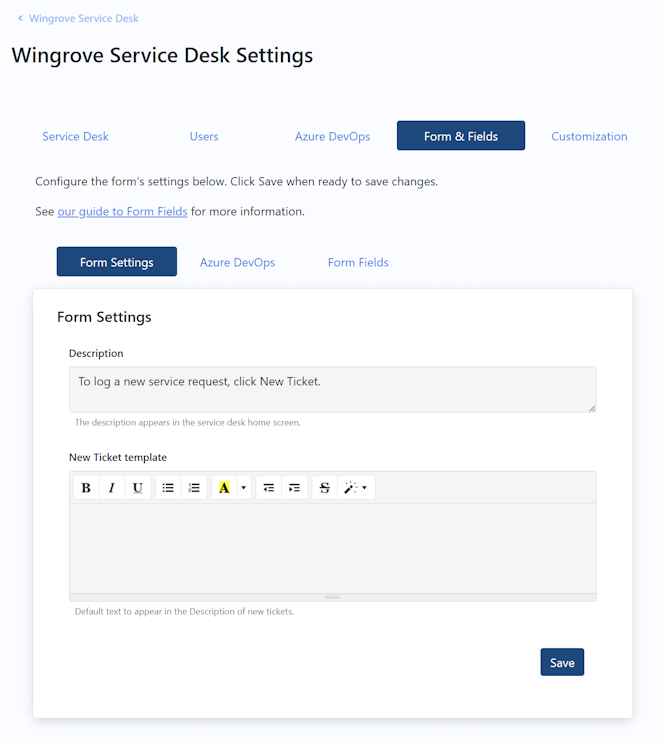
This release has renamed the Fields page to Form & Fields, and some settings have been moved to this page.
The following setting has moved from the General page to Form & Fields page:
* **New Ticket template**
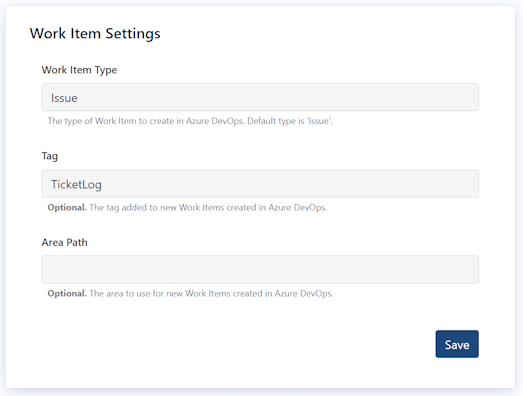
The following settings have moved from the Azure DevOps page to Form & Fields page:
* **Work Item Type**
* **Tag**
* **Area Path**
## New settings
The following settings have been added to Form & Fields:
* **Name** - this sets the title text that appears on the Service Desk screen before the "New Ticket" button. This field is optional.
* **Description** - this sets the text that appears on the Service Desk screen before the "New Ticket" button. This field is optional.
* Default value: *To log a new service request, click New Ticket.*
When the Form & Fields page is saved, TicketLog will check the Azure DevOps connection is valid for the new settings. Results will appear in the Connection section at the end of the page, and will include warnings about missing required fields or other errors.
## Multi-forms
{% hint style="warning" %}
**For the latest information regarding multi-forms, refer to the** [Forms & fields](/documentation/administrators-guide/forms-and-fields.md) **documentation page.**
{% endhint %}
With multi-forms you can specify multiple forms for users to choose from when submitting a new ticket.
Each form can specify these configuration settings:
* Name
* Description
* New ticket template
* Azure DevOps work item settings:
* Work Item Type
* Tag
* Area Path
* Form fields
The following conditions apply to multi-forms:
* All forms must connect to the same Azure DevOps organization and project.
* You can add and delete multiple forms, but must have at least one form.
* One form must be designated as the *viewing form*. This form is always used to display the contents of a ticket, regardless of which form was used to create the ticket. It must therefore include all relevant fields for your users.
## Post-release notes
### Update Releases
#### 2024.06.14
* **New:** Support for multi-line/html fields
* Refresh styling of Forms & Fields Settings page (screenshots above have been updated)
* Improve handling of large images that overflow in ticket comments and fields
* Remove hyperlink from '# links' in ADO comments
* Hide My Tickets for logged in users who are not a service desk member
* Hide Pro Upgrade button from non-admin users in My Service Desks page
* Fixed: Unexpected redirect on New Ticket when using multi-form on custom domain
* Fixed: Loss of Description field contents when New Ticket submission fails
#### 2024.06.21
* **New:** Support for changing the display order of form fields
* Fixed: Check Connection now validates all forms, not just the Viewing form.